
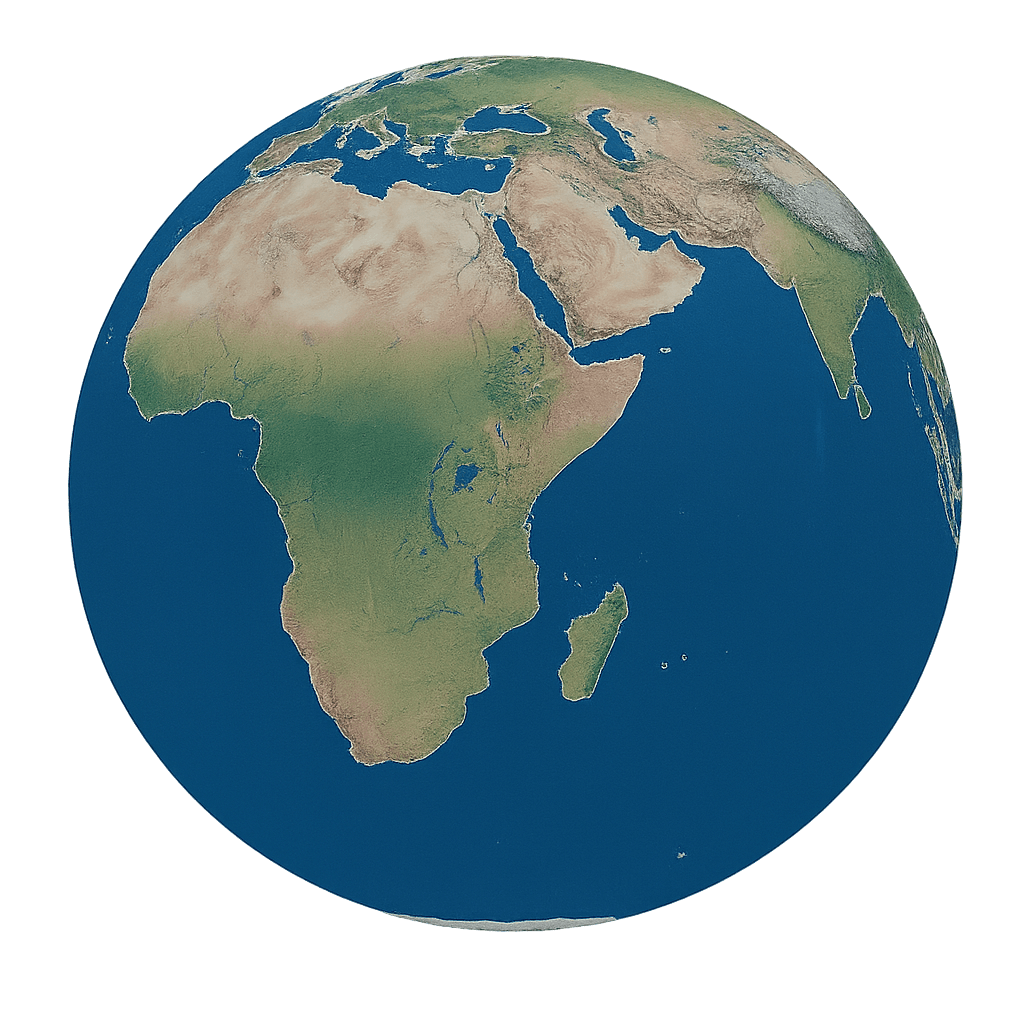
Spondula Opens Beta Access, Introducing Global Payments by S-Handle to Users Across Six Continents

SPONDULA

SPONDULA ANYONE ANHYWHERE ANYTIME
New payment platform launches invite-only Beta, allowing users to send and receive payments globally using simple S-usernames instead of bank details
Creators can build audiences anywhere. Freelancers can work anywhere. Businesses can sell anywhere. Yet payments remain fragmented. We built Spondula to make global payments as simple as communication”
MANCHESTER, UNITED KINGDOM, June 1, 2026 /EINPresswire.com/ -- Spondula Opens Beta Access, Introducing Global Payments by S-Handle to Users Across Six Continents— WAEL EL HAJJAR
New payment platform launches invite-only Beta, allowing users to send and receive payments globally using simple S-usernames instead of bank details, account numbers, IBANs, SWIFT codes, or wallet addresses
Spondula today announced the opening of its invite-only Beta program, marking the first public access to a new global payment network designed around a simple belief: payments should move as easily as communication.
The launch introduces the S-Handle, a unique payment username that allows users to send and receive payments using a simple S-username instead of sharing traditional banking information, account numbers, sort codes, IBANs, SWIFT details, routing numbers, or lengthy wallet addresses.
The Beta release represents the first public milestone in a project that has been under development for several years and arrives at a time when creators, freelancers, online businesses, merchants, remote workers, digital entrepreneurs, and international families are increasingly operating across borders while payment systems remain fragmented by geography and legacy financial infrastructure.
Prior to opening Beta access, Spondula attracted registrations from users across 29 countries spanning North America, Europe, Africa, Asia, Latin America, and Oceania. Early waitlist registrations have been received from the United States, Canada, the United Kingdom, France, Germany, Spain, Portugal, Italy, Poland, the Netherlands, India, Pakistan, Bangladesh, Thailand, Indonesia, Hong Kong, South Korea, Australia, Mexico, Colombia, Brazil, Chile, Nigeria, South Africa, Kenya, Morocco, Egypt, Tanzania, and Ghana.
The company believes this early international demand reflects a broader shift taking place across commerce, work, and digital participation. People increasingly build audiences, businesses, careers, and communities internationally, yet payments often remain tied to national infrastructure and country-specific systems.
"The internet connected the world, but payments never truly caught up," said Wael El Hajjar, Founder of Spondula.
"We can message someone on the other side of the world instantly. We can collaborate globally. We can build businesses online. Yet when it comes to payments, people are still asked to exchange account numbers, IBANs, SWIFT codes, or wallet addresses. We believe there is a simpler way."
Why Payments Still Feel Broken
Over the past two decades, communication has become increasingly frictionless.
Messages move instantly between countries.
Video calls connect continents in seconds.
Businesses can reach customers worldwide.
Creators can build audiences across multiple continents.
Freelancers can work for clients thousands of miles away.
The internet has removed many of the barriers that once limited participation in global commerce.
Payments, however, often tell a different story.
Receiving a payment may require sharing bank account information. Sending payments internationally can involve multiple intermediaries, settlement delays, currency conversion processes, routing requirements, and systems that vary significantly between countries.
For consumers, these processes can feel outdated.
For creators, freelancers, merchants, online businesses, and internationally connected families, they can become a recurring source of friction.
A freelance designer in Pakistan may work with clients in Canada and Germany.
A software developer in India may serve businesses in London and Amsterdam.
A creator in Brazil may receive support from followers in Australia, Germany, and the United States.
A merchant in Mexico may sell products to customers across Europe.
An entrepreneur in Nigeria may operate a business serving users globally.
The economic relationship is increasingly global. The payment experience often remains fragmented.
According to Spondula, this disconnect between global participation and payment infrastructure represents one of the defining challenges of the modern digital economy.
Introducing the S-Handle
At the center of the Spondula network is the S-Handle.
An S-Handle functions as a unique payment username that users can claim and use across the platform.
Instead of providing banking information or copying complex payment identifiers, users simply share their S-Handle.
Examples include:
S-alex
S-sarah
S-johnsmith
S-yourbusiness
The company believes payment usernames have the potential to simplify participation in global commerce in much the same way email addresses simplified communication online.
People already use usernames throughout their digital lives.
Social media platforms use usernames.
Messaging applications use usernames.
Gaming platforms use usernames.
Online communities use usernames.
Spondula's view is that payments should operate with the same simplicity.
Rather than relying on technical financial identifiers, users can establish a payment identity that is easy to remember, easy to share, and designed for global use.
The company describes the S-Handle as a payment identity layer intended to support future wallets, creator services, merchant tools, QR payments, payment gateway infrastructure, and broader digital commerce applications.
Early Demand Across Six Continents
Before opening Beta access, Spondula attracted registrations from users across six continents.
The company says the waitlist includes creators, freelancers, entrepreneurs, merchants, online businesses, remote workers, digital communities, and internationally connected families.
Registrations have emerged from established financial centres such as the United States, Canada, the United Kingdom, Germany, France, Hong Kong, and Australia, alongside rapidly growing digital economies including India, Pakistan, Bangladesh, Indonesia, Thailand, Nigeria, Kenya, South Africa, Brazil, Colombia, Mexico, Egypt, and Ghana.
According to Spondula, the geographic diversity of the waitlist reflects broader changes taking place across the global economy.
More people are earning income online.
More businesses are operating internationally.
More creators are building audiences across multiple countries.
More professionals are working remotely.
More consumers are participating in digital commerce beyond their local markets.
Whether someone is located in London, Toronto, Berlin, Madrid, São Paulo, Lagos, Nairobi, Karachi, Bangkok, Jakarta, Melbourne, or Mexico City, the need for simple payment infrastructure remains remarkably consistent.
The Rise of the Global User
According to Spondula, one of the most significant changes taking place across the global economy is the emergence of what it describes as the "global user."
Unlike previous generations, many people today no longer operate exclusively within a single local economy.
They build audiences internationally.
They work with clients located in different countries.
They sell products globally.
They participate in communities that span continents.
For many individuals, economic opportunity is no longer determined by geography.
A freelance software developer based in Pakistan may work with businesses in Canada, Germany, and the United Kingdom.
A graphic designer in South Africa may collaborate with startups in Berlin and Amsterdam.
A creator in Brazil may build an audience that includes supporters in Australia, the United States, France, and South Korea.
A consultant in Kenya may advise businesses across Africa, Europe, and the Middle East.
A merchant in Mexico may serve customers throughout North America and Europe through digital channels.
The internet has enabled these relationships to form naturally.
Communication is instant.
Content is global.
Commerce is increasingly international.
Yet payment systems often remain fragmented between countries, providers, and banking infrastructures.
The company believes this growing mismatch between global participation and local payment systems is creating demand for new forms of payment infrastructure.
Why Payment Identity Matters
For decades, digital communication has relied on simple identifiers.
Phone numbers identify people.
Email addresses identify communication.
Domain names identify websites.
Social media handles identify online presence.
Yet despite the growth of digital commerce, there is still no universally recognised payment identity used across global economic interactions.
Instead, people often rely on a collection of banking information, account numbers, routing codes, IBANs, SWIFT details, wallet addresses, usernames, payment links, and country-specific payment systems.
The result is an ecosystem that can feel fragmented, particularly for individuals and businesses operating internationally.
Spondula believes payment identity can help simplify this experience.
Rather than asking users to remember technical financial identifiers, the company aims to provide a simple, human-readable payment identity through the S-Handle.
The company sees payment identity as a foundational layer for future digital commerce.
Just as people share an email address when they want to receive communication, Spondula believes payment usernames may become increasingly common for receiving payments, participating in commerce, supporting creators, paying businesses, and interacting economically online.
Why Creator Payments Matter
One of the strongest trends shaping the digital economy is the rise of creator-led businesses.
Millions of people now generate income through video content, live streaming, podcasts, newsletters, digital products, memberships, coaching, online communities, and audience-supported projects.
What makes many creator businesses unique is that audiences are often international from the beginning.
A creator may be based in London while receiving support from followers in Germany, Canada, Australia, South Korea, Brazil, and the United States.
A gaming creator may attract viewers from dozens of countries.
A newsletter publisher may have subscribers across multiple continents.
A musician may build a global audience before performing a single live show.
The company believes creator monetization is becoming increasingly global. While audiences can be built internationally, payment systems often remain fragmented across countries and platforms.
Through Creator Pages, Spondula aims to provide creators with a public-facing payment identity connected directly to their S-Handle.
Supporters can discover creators, connect through their payment identity, and contribute directly through the platform.
Supporting Freelancers and Remote Workers
The growth of remote work has transformed how professionals participate in the global economy.
Designers, developers, consultants, marketers, writers, educators, and specialists increasingly work with organisations located far beyond their home countries.
For many professionals, opportunity is no longer determined by geography.
The internet has made it possible for someone in Lahore to work with a company in Toronto.
A consultant in London can advise a client in Dubai.
A designer in Cape Town can collaborate with a startup in Berlin.
A developer in Bangalore can contribute to projects based in New York.
Spondula believes payment infrastructure should evolve alongside this shift.
The company's long-term vision is to support globally connected professionals through a payment identity designed for a world where opportunity is increasingly international.
Small Businesses, Merchants and Global Commerce
Digital commerce has lowered barriers to entry and allowed businesses to reach customers far beyond their local markets.
A merchant in Mexico can sell to customers in Europe.
A digital business in South Africa can serve clients in North America.
A software company in Poland can operate globally from its first day of trading.
A retailer in Portugal can attract customers from multiple countries through social media and online marketing.
As commerce becomes increasingly international, Spondula believes merchants will require payment infrastructure capable of supporting more flexible forms of participation.
This forms part of the company's longer-term roadmap, which includes merchant payment infrastructure, QR payments, payment gateway services, and business-focused tools designed to support global commerce.
What Users Can Do During Beta
The initial Beta release introduces core functionality designed around simplicity, accessibility, and global participation.
Users can claim their own S-Handle and establish a payment identity on the network.
Users can fund their wallets and manage balances through a streamlined web-based experience.
Users can send payments to other Spondula users using S-Handles rather than traditional payment information.
Users can receive payments through their payment identity without sharing banking details.
Users can also access Creator Pages, enabling creators, communities, freelancers, and digital businesses to establish public-facing payment destinations linked directly to their S-Handle.
The company describes Beta 1 as the foundation for a broader ecosystem that will continue expanding throughout 2026 and beyond.
The Future of Payments
Spondula believes the next generation of payment infrastructure will be shaped by simplicity, accessibility, and global participation.
Consumers increasingly expect seamless digital experiences.
Businesses increasingly operate online.
Creators increasingly earn income directly from audiences.
Communities increasingly form around shared interests rather than shared geography.
As these trends continue, the company expects payment experiences to evolve accordingly.
Future payment interactions may increasingly involve payment usernames, QR payments, creator pages, payment links, digital wallets, merchant integrations, and mobile-first experiences designed around convenience and accessibility.
The company believes payment infrastructure should become less visible to users and easier to interact with.
Rather than navigating technical financial systems, users should be able to focus on participating in commerce, supporting creators, running businesses, and interacting with communities.
The Road Ahead
While person-to-person payments form an important part of the initial Beta experience, Spondula's longer-term vision extends far beyond individual transfers.
Future development priorities include native mobile applications for iPhone and Android, merchant payment infrastructure, QR payment capabilities, creator monetization tools, business payment services, and expanded wallet functionality.
The company is also preparing to introduce a Merchant API that will allow businesses, developers, and platforms to integrate Spondula payment functionality directly into websites, applications, and checkout experiences.
Future merchant capabilities are expected to include payment gateway functionality, QR payments, payment links, business payment tools, digital commerce integrations, and global settlement capabilities.
A Vision for Global Payment Identity
Spondula believes the future of payments will be shaped not only by faster infrastructure, but by better identity.
Phone numbers gave people a communication identity.
Email addresses gave people a digital identity.
Social media usernames gave people a public identity.
The company believes payment usernames can provide a financial identity designed for an increasingly connected world.
As commerce becomes more global, more mobile, and more digital, Spondula believes users will increasingly expect payment experiences that match the simplicity of modern communication.
"The internet gave everyone a global voice and a global audience," said El Hajjar.
"We believe the next step is giving people a global payment identity. That's the vision behind S-Handles. Beta access is the beginning of that journey, and we're excited to welcome our first users into the network."
About Spondula
Spondula is a global payment network focused on payment identity, digital wallets, creator payouts, merchant payments, QR payments, payment gateway infrastructure, and international peer-to-peer transfers.
Built around its S-Handle payment username system, Spondula aims to simplify how individuals, creators, freelancers, merchants, businesses, and communities send and receive payments across borders.
Prior to launch, the company attracted registrations from users across 29 countries spanning North America, Europe, Africa, Asia, Latin America, and Oceania.
OLENA HABERLIN
Spondula LTd
email us here
Visit us on social media:
LinkedIn
Instagram
TikTok
X
Legal Disclaimer:
EIN Presswire provides this news content "as is" without warranty of any kind. We do not accept any responsibility or liability for the accuracy, content, images, videos, licenses, completeness, legality, or reliability of the information contained in this article. If you have any complaints or copyright issues related to this article, kindly contact the author above.
